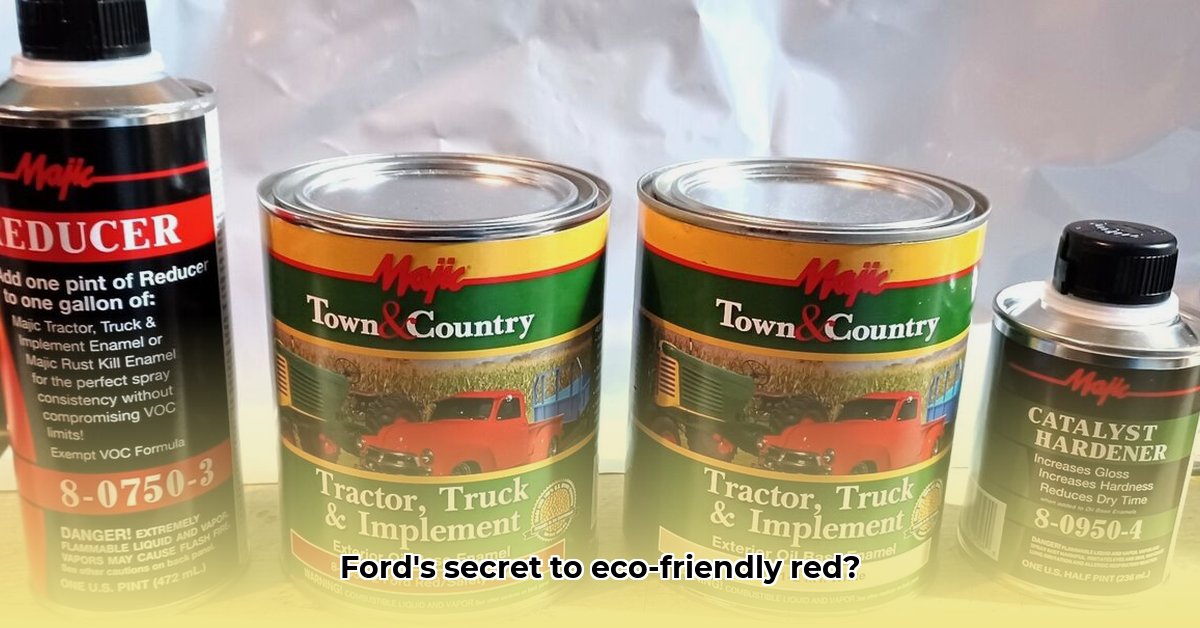
Ford Red Tractor Paint: Rethinking an Icon
The iconic Ford red tractor paint—a symbol of agricultural heritage—presents an environmental paradox. While representing hard work and enduring quality, its traditional formulation relies on oil-based enamels with high volatile organic compound (VOC) content (harmful chemicals that evaporate into the air). This contributes significantly to air pollution and carries an environmental cost often overlooked. But is this vibrant red truly worth the price? This guide explores the environmental footprint of traditional tractor paint, examines greener alternatives, and provides actionable steps toward a more sustainable approach. For information on Ford tractor parts, see this resource.
The Environmental Impact of Traditional Tractor Paint
Traditional oil-based enamel paints, long synonymous with Ford's signature red, release substantial VOCs into the atmosphere during application and throughout the paint's lifespan. These VOCs contribute to smog formation, impacting air quality and human health. Furthermore, the manufacturing process of such paints is energy-intensive, increasing carbon emissions. Finally, the disposal of these paints often requires specialized handling, posing additional environmental challenges. Given that repainting is a regular expense for farm owners, the cumulative environmental impact becomes significant. Isn't it time to question the sustainability of this familiar practice? Are the benefits of traditional paints truly outweighing the environmental consequences?
Greener Alternatives: Toward a Sustainable Future
Fortunately, sustainable alternatives to traditional tractor paints are emerging. Water-based paints significantly reduce VOC emissions, offering a more environmentally friendly option. Furthermore, bio-based paints, utilizing renewable resources like plant-derived resins, minimize the environmental impact across the entire product lifecycle – from manufacturing to disposal. These paints are not only better for the environment, but could also translate to long-term cost savings. Dr. Anya Sharma, Environmental Scientist at the Institute for Sustainable Agriculture, notes, "The shift toward bio-based paints is crucial. They significantly reduce VOC emissions and offer a pathway towards a truly circular economy in agriculture." This move is not just eco-conscious; it's economically smart in the long run.
Making the Switch: A Practical Guide to Sustainable Painting
Transitioning to eco-friendly paints is simpler than you might think. It's a move toward both environmental responsibility and improved financial decision making. We offer a step-by-step guide below:
1. Research and Selection: Thoroughly research low-VOC or bio-based paints. Seek certifications from reputable environmental organizations, validating environmental performance claims. Compare options based on cost, durability, application ease, and long term cost-benefits.
2. Expert Consultation: Consult with paint suppliers and equipment dealers. Leverage their expertise to select the best paint for your specific needs and climate conditions. Their insights into the performance and longevity of various sustainable paint options are invaluable.
3. Pilot Testing: Before committing to a full repaint, test your chosen eco-friendly paint on a small, inconspicuous area. Assess performance, durability, color accuracy, adhesion strength, and overall finish. This critical step identifies potential issues before large-scale application.
4. Responsible Disposal: Adhere to local regulations when disposing of old paint. Explore recycling programs for hazardous waste, ensuring environmentally sound disposal practices.
A Closer Look at Paint Types: A Comparative Analysis
The table below compares different paint types. Note the variances in VOC content and relative environmental impact. Remember that cost and durability vary by brand and specific product. Further research is crucial for complete understanding and longevity assessment of newer, bio-based options.
| Paint Type | VOCs | Environmental Impact | Typical Cost | Typical Durability |
|---|---|---|---|---|
| Oil-Based Enamel | High | High | Lower | High |
| Water-Based Paint | Low | Low | Moderate | Moderate |
| Bio-Based Paint | Very Low | Very Low | Higher | Moderate to High |
How to Choose Eco-Friendly Paint for Your Agricultural Machinery
Key Takeaways:
- Balancing cost, durability, and environmental impact is key. A lifecycle assessment is crucial for responsible decision making. More sustainable options may have higher up-front costs, but may provide long-term savings. Preventative maintenance extends paint life, reducing resource consumption and waste. Always consider VOC content, disposal methods, and total lifetime costs.
Choosing Eco-Friendly Tractor Paint – A Step-by-Step Approach
- Research: Investigate various brands and their eco-friendly lines. Look for certifications (low-VOC, bio-based).
- Compare Data: Analyze manufacturers' data sheets, focusing on VOC content, durability data, adhesion, and cost per square foot.
- Lifecycle Costing: Consider initial costs alongside long-term expenses like repainting and disposal.
- Testing: Test a small area with your chosen paint to evaluate performance before full application.
- Sustainable Disposal: Research and follow local regulations for paint disposal.
Eco-Friendly Paint Alternatives
Many manufacturers are now offering sustainable alternatives utilizing bio-based resins and other eco-conscious ingredients. While initial costs may be higher, the long-term environmental and economic advantages are substantial. Dr. David Miller, Agricultural Engineering Professor at Purdue University, points out, “The upfront investment in sustainable paints presents a powerful opportunity for farmers to simultaneously reduce their environmental footprint and enhance their brand's sustainability profile."
The Importance of Preventative Maintenance
Regular cleaning and protective coatings extend the life of your paint, minimizing the need for frequent repainting. This translates directly to reduced resource use and waste.
Choosing environmentally friendly paints is not merely an option—it's a commitment to a more sustainable future for agriculture. By making informed choices, farmers can contribute significantly to preserving our planet's resources. Let’s paint a more sustainable future, one tractor at a time.